

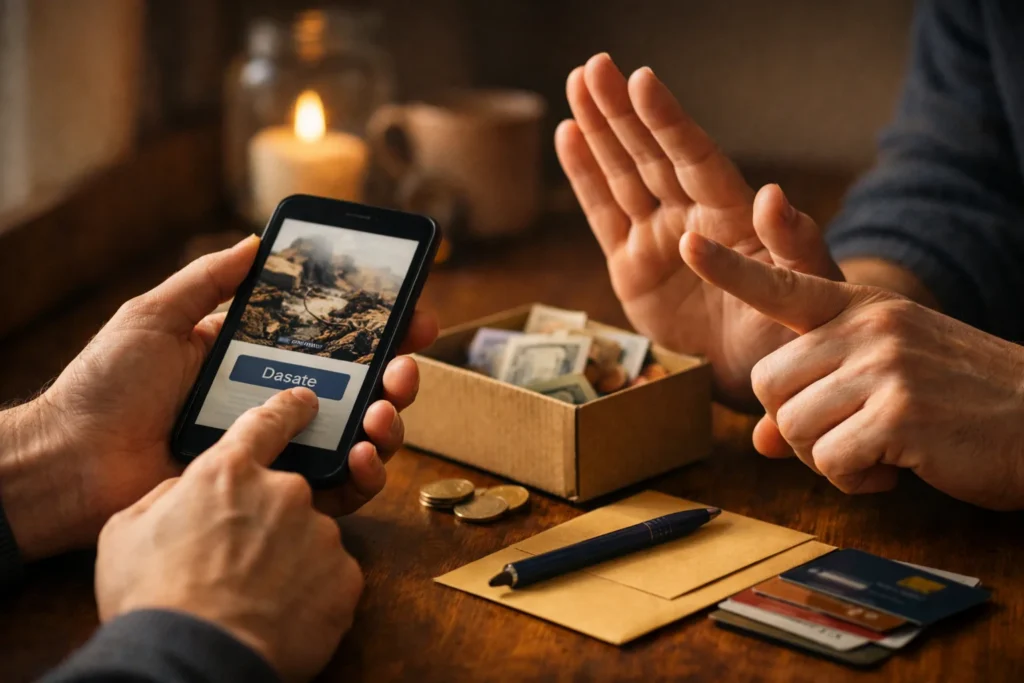
After a hurricane, wildfire, flood, or earthquake, the instinct to help is immediate and generous. Unfortunately, so is the instinct of scammers, who know that sympathy is at its peak when the news is at its worst. A few quiet minutes of checking before you give can make sure your money reaches people in need rather than someone’s pocket.
Why disasters attract fraud
Fake appeals spread quickly because they piggyback on real events. Social media posts, text messages, emails, and phone calls can all carry them. Some use the name of a genuine organization with a slight spelling change. Others invent a heartfelt story and a nameless fund. The Federal Trade Commission, which runs a consumer information site at consumer.ftc.gov, regularly warns that scammers exploit current events, and charity fraud after a disaster is a recurring example.
Warning signs worth taking seriously
- Pressure to act right now. A real charity will still be there tomorrow. Urgency is a tool for stopping you from thinking.
- Vague descriptions. If an appeal cannot say specifically what it does or where the money goes, be wary.
- Unusual payment requests. Consumer protection agencies warn that requests for gift cards, wire transfers, or cash sent by courier are classic scam signals. Legitimate charities do not insist on these.
- A name that is almost familiar. Lookalike names are a common trick. Read the name carefully and compare it with the organization you meant.
- Thanks for a donation you do not remember making. This is a way to get you to confirm details or to make a second payment.
- Unsolicited links. Do not click through from a surprise text or an email you were not expecting.
A simple checking routine
- Start from the charity, not the message. Rather than using a link you were sent, type the organization’s web address yourself or search for its name and navigate to its official site.
- Search the name with the word “complaints” or “scam.” A quick look at what others have reported can reveal problems early.
- Look at independent charity evaluators. Several nonprofit watchdog groups publish reviews of how established charities handle money. Use them as one input, and remember that a newer, legitimate group may not be listed yet.
- Ask how your gift will be used. A trustworthy organization can tell you in plain language what it does, and whether your donation goes to relief now or to longer-term rebuilding.
- Confirm the tax status if you plan to deduct. Donations are only deductible when given to qualifying organizations, and the rules are specific. If you plan to claim a deduction, ask a tax professional or check the Internal Revenue Service guidance for current requirements.
Crowdfunding needs extra care
Online fundraisers for individual victims can be sincere, but they are also easy to fake. Before giving, ask whether you know the person personally or can verify them through someone you trust. Look at whether the page names a specific beneficiary, how updates are posted, and whether the platform has a process for reporting fraud. If you cannot verify the story, consider directing your gift to an established organization that is already working on the ground.
Pay in a way you can trace
A credit card or a debit card gives you a record and, in many cases, some ability to dispute a charge if something goes wrong. Cash, gift cards, and wire transfers are very hard to recover. Keep a copy of your receipt and any confirmation email, particularly if you plan to claim a deduction later.
Giving locally can be the clearest choice
National organizations do enormous work, but local ones often understand local needs best, such as community foundations, food banks, and shelters in the affected area. Check how they accept donations and whether they have a long track record. Another option that relief groups often favor is a straightforward cash gift rather than collecting goods, because cash lets them buy exactly what is needed and avoids the burden of sorting piles of donated items.
What to do if you think you have been targeted
If you spot a suspicious appeal, do not respond to it. Report it to the Federal Trade Commission, and also tell your state attorney general’s office or your local consumer protection agency. If you already paid, contact your bank or card issuer quickly, explain what happened, and ask what options you have. Acting fast gives you the best chance of limiting the damage. It also helps others, because reports let agencies spot patterns and warn the public.
Helping after a disaster is a good impulse and worth protecting. A short pause to verify who you are giving to costs almost nothing, and it keeps your generosity doing what you intended.